English
 Français
 Português
 العربية
 한국어
한국어 Türkçe
 Tiếng Việt
 Español
 हिन्दी

Finding corrected French exercises (FLE) that truly match your level takes time. What you want is a clear method to correct yourself on your own, gain independence, and lock in the basics of French as a foreign language. On fle.re, the activities are designed for adults and teenagers alike, with a genuine focus on practice and progress. No more textbooks gathering dust and no more doubts when facing a grammar point. Seeing the answer right away helps you understand your mistake in the moment, then correct it for good.
Whether you want to strengthen your reading comprehension or polish your writing, online answer keys give you simple, direct support. Everyone moves at their own pace, with situations drawn from everyday life and topics that matter today. Learning French becomes less of a burden, livelier and more effective. Progress shows immediately thanks to clear corrections and a real variety of themes, from workplace vocabulary to classified ads, and on to the practical side of everyday life.
This guide covers the whole subject, step by step. How to recognise a good corrected exercise, how to choose it according to your level, where to find reliable materials, and above all how to make the most of each correction. The idea is not to pile up worksheets without thinking, but to turn every mistake into learning that sticks. There is nothing better than learning from your own answers, whatever your starting point.
Why corrected FLE exercises help you progress faster
An exercise without a correction always leaves a doubt. You hand in your answer, but you never really know whether it holds up. The answer key removes that doubt. It shows the right answer, but also the path to get there. After a fill-in-the-blank text or a series of comprehension questions, you see your mistake and then understand the logic behind the solution. It is that logic that matters, far more than the right box ticked by chance.
What's your real French level?
Answer 10 quick questions right here, without leaving the page. Create your account at the end to see your level.
Test complete! 🎉
Create your free account to see your estimated level and unlock a tailored path.
See my levelWorking with immediate corrections is a bit like having a private tutor available at any hour. You spot your weak points without waiting, you avoid ingraining a wrong habit, and you move forward on firmer ground. This way of working encourages independence. You become an active part of your own progress rather than a mere spectator of a lesson. Every mistake corrected on the spot is worth more than a bad reflex repeated for weeks.
Concrete situations change everything. Understanding an advertisement, writing a letter, reading a schedule, filling in a form: these activities connect theory to real life. Detailed corrections help you fine-tune your practice and lock in common turns of phrase. The effect is felt most in written expression, where an unnoticed mistake gets copied over for a long time. Doing an exercise about a typical day, correction in hand, suddenly makes French more accessible and less abstract.
Choosing corrected FLE exercises suited to your level
An exercise that is too hard is discouraging, one that is too easy is boring. Getting it right comes down to the level. The Common European Framework of Reference classifies learners from A1 to C2, from complete beginner to very fine mastery. Knowing your real level keeps you from wasting time on poorly calibrated activities. The fle.re platform offers placement tests and activities graded according to this scale, to build a path that rises smoothly, without jolts or discouragement.
A beginner benefits from working on introductions, the morning routine or the simple description of a person. An intermediate level tackles texts about health, French culture or a news item. Higher up, you argue, you add nuance, you read in-depth articles. For each activity, the detailed correction supports your memory of the key notions and prevents blocks caused by a misunderstood instruction. The right level is the one that requires effort, without ever killing the desire to keep going.
- Check the level indicated for each exercise (A1, A2, B1, B2, C1, C2).
- Choose themes close to your real goals: employment, housing, health, studies.
- Keep the activities that explain the most common mistakes, not just the solution.
- Alternate between comprehension, written expression, vocabulary and grammar for balanced work.
- Take a self-assessment test at the start to target your real needs.
Where to find reliable and varied corrected FLE materials
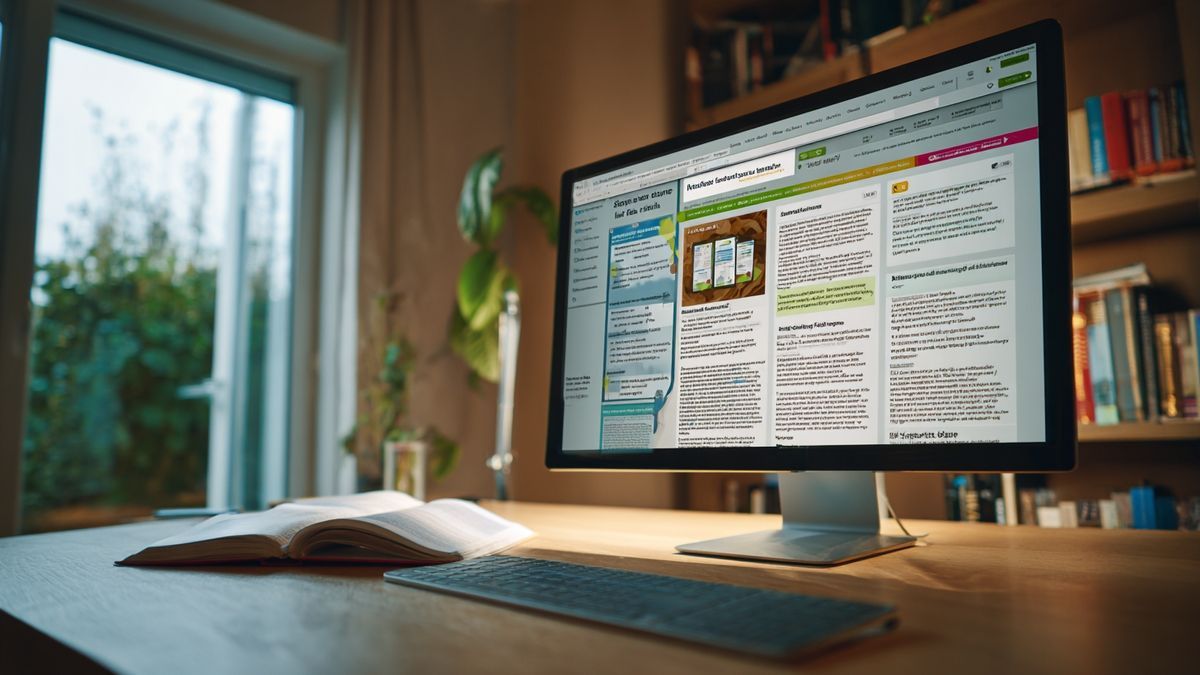
Not all materials are equal. Online, it is better to choose resources designed by FLE specialists, kept up to date and varied in their formats. There are also ways to learn French for free, without sacrificing the quality of the corrections. The fle.re site stands out for the diversity of its activities: reading comprehension, guided writing, dialogues to complete, analysis of recent articles and themed worksheets on very concrete subjects, from road safety to life in Paris.
Varying materials means multiplying learning contexts. One day an audio dictation to strengthen spelling and the ear, another day a comprehension text about a current debate. French audio dictations work on listening and writing at the same time, something purely written exercises often lack. Each material comes with its correction, sometimes with personalised advice. That way you keep the thread, without ever getting stuck on a difficulty for too long.
Preparing for an exam follows the same logic. To aim for an official certification, practising on topics close to the real test makes all the difference. Those who want to prepare for the DELF and DALF need corrected exercises that use the real format of the tests. You get used to the timing, the type of instructions and the assessment criteria. On exam day, nothing surprises you anymore, because every task has already been rehearsed in calm conditions.
I remember a session with a group of adults, working on exercises about cultural prejudices. The reasoned corrections sparked a real debate. Everyone wanted to defend their idea, rephrase it, sharpen their thinking. We were a long way from stock phrases. That day, the answer key did not just give the right answer: it started the conversation. That is often where learning comes alive, when the correction becomes a starting point rather than an end point.
The most useful corrected exercises for gaining independence
Some activities push you further towards independence than others. These are the ones that, once corrected, invite you to go back to the instructions and note the correct practice. Examples include writing letters, requesting information, making a complaint or a note to a friend. Then come the comprehension of real documents, advertisements, ads, dialogues, and the analysis of everyday situations such as a timetable or an administrative form. These exercises give the solution and, above all, the list of pitfalls to avoid.
Digital materials add a real bonus. The correction comes right away, sometimes with a video explanation or a reminder of the grammar points to review. You practise at home, without waiting for a teacher’s feedback. The result shows: you move forward faster, you gain confidence, and you dare to apply what you have learned in real life. Filling in a file at the town hall or handling a call with customer service then feels far less daunting than before.
Independence does not fall from the sky. It is built through repetition, trial and, above all, the natural method that teaches you to step back from your mistakes. An independent learner no longer just looks for the right answer: they understand why it is right. They spot their recurring mistakes and adapt their strategy. Reliable, up-to-date materials make this work possible, because they offer a clear correction at every step, without ever leaving the learner alone with their doubt.
Which skills to work on with corrected exercises
A good programme addresses all four skills, without leaving a single one out. Reading comprehension is worked on with short, clear texts and targeted questions. Listening comprehension comes through listening to a dialogue or a dictation. Written expression is built up by writing, then comparing your work to the model. Oral expression, harder to correct on your own, benefits from being read aloud from an answer key. Each skill feeds the others and forms a coherent whole.
Grammar, conjugation and vocabulary
The foundation of the language remains grammar and conjugation, served by a vocabulary that widens little by little. Fill-in-the-blank exercises, sentences to transform and conjugation tables provide solid landmarks. The correction shows not only the right form, but the rule behind it. You remember an ending better when you understand why it changes. Vocabulary, for its part, sets in through context, in a living sentence, rather than in a dry list memorised the night before a test.
Everyday comprehension and expression
Everyday language deserves as much attention as the rules. Reading a recipe, following directions, understanding a work email: these simple tasks come up again and again. Corrected exercises on these themes prepare you for real needs. They teach you to spot useful information and to answer clearly. This concrete work is reassuring, because it quickly shows what you already know how to do in French, and what still needs a little regular practice.
Building corrected FLE exercises into a daily routine
Real progress comes from regularity, not from marathon sessions once a month. Twenty minutes a day is better than one long, exhausting session on Sunday. To keep it up over time, you need to vary the formats and the difficulty. You can start with a little reading comprehension, move on to grammar, then finish with a short dictation. On fle.re, exercises are sorted by theme, level and skill, which helps you build a personal programme that is simple to follow.
The secret lies in a regular routine that you keep even on days when you do not feel like it. Five minutes are better than nothing. Noting your mistakes in a notebook, coming back to them the following week, redoing a failed exercise: these small habits work wonders over a few months. The correction then serves as a compass. It shows where you stand and what is left to work on. It is this short loop, between effort and feedback, that establishes real, lasting progress.
| Daily exercise | Main goal | Tip for use |
|---|---|---|
| Fill-in-the-blank text in written expression | Lock in vocabulary and syntax | Reread on your own before looking at the answer key, then compare line by line |
| French audio dictation | Strengthen spelling and listening | Listen several times, write, then check each agreement against the correction |
| Writing on a current topic | Develop expression and arguments | Read the correction, then rephrase it aloud to make the structure your own |
Reading an answer key well to truly learn from your mistakes
A poorly used answer key is worthless. Many people just count the right answers, then move on. That is wasted time. The real value of a correction lies in the mistakes, not in the successes. You have to take each error one by one, look for the rule that was missing and note it in your own words. This small effort turns a simple check into a useful lesson. Without it, you make the same mistake a week later without even realising it.
A simple method helps you spot your recurring mistakes. Sort them into three families: grammar, vocabulary and comprehension. After a few exercises, a pattern appears. Maybe past participle agreements, maybe prepositions, maybe reading the instructions too quickly. Once the weak point is identified, you focus your practice on it. Working on your real weakness pays off far more than redoing ten times what you already master. The correction then becomes a diagnostic tool, not just a verdict.
Conclusion

Corrected exercises offer a clear method for making progress in French as a foreign language. Thanks to the corrections, everyone spots their strengths and targets their weak points without getting lost. This approach encourages you to get involved, to work at your own pace and to keep up the regularity that makes the difference over time. You no longer endure the language, you build it up little by little, one correction after another, with solid landmarks at every stage of the journey.
Practising this way means multiplying the chances to work on comprehension, expression and grammar at the right level. Many people find it reassuring to move forward without pressure, at their own measure. And seeing your progress in black and white is a real motivation to continue. Well-structured resources let you vary the subjects, which makes each session livelier. French then stops being a mountain and becomes a series of small steps, crossed one after another, with real corrections to guide the way.
Frequently asked questions about corrected FLE exercises
Choose exercises suited to your level, from A1 to C2, and close to your real goals: comprehension, written or oral expression. Favour varied activities with a detailed correction, themes from everyday life or work, and a difficulty that rises little by little. Reasoned answer keys, which explain the mistake instead of just giving the solution, really help. Also consider interactive FLE exercises with immediate feedback to consolidate what you have learned over time. Both have their place, but the interactive format brings very useful immediate feedback. You see your mistake right away and can redo the exercise until you master it. This fast loop helps most with grammar, conjugation and reading comprehension. Paper, for its part, keeps its value for long writing and note-taking. The ideal is still to combine the two according to the skill being worked on and the time of day. Many platforms offer free activities with corrections, sorted by level and by skill. Look for resources designed by FLE specialists, kept up to date and varied in their formats. A good free exercise must always provide its correction, otherwise it loses its point. On fle.re, the graded and corrected activities cover comprehension, grammar, vocabulary and dictation, with themes drawn from everyday life. Start with a placement test to situate your level on the A1 to C2 scale. A beginner starts with introductions, numbers and the morning routine. An intermediate level tackles texts about health, culture or a news item. The key is to choose a difficulty that requires real effort without killing the desire. An exercise that is too hard is discouraging, one that is too easy wastes time. Regularity matters more than duration. Twenty minutes a day is better than one long session once a week. You can alternate a short comprehension exercise, a grammar point and a small dictation. The most useful thing is to keep the rhythm, even on busy days, when five minutes are enough to maintain the habit. This regularity establishes reflexes and makes each correction more useful, because it adds to continuous work. An answer key read well partly replaces a teacher’s eye. Take each mistake one by one, look for the rule that was missing and note it in your own words. Sort your errors into grammar, vocabulary and comprehension to see your real weaknesses. Redo the failed exercise a few days later to check that the rule has stuck. This feedback work, patient and regular, leads to sure progress, even for the complete self-taught learner. Yes, and they are among the most complete. An audio dictation works on listening, spelling and grammar in a single activity. You listen, you write, then you compare each word to the reference text. The correction immediately points out forgotten agreements and misheard sounds. It is a demanding exercise, but a very rewarding one, because it touches several skills at once and quickly reveals the fragile points to work on again.How do I choose effective corrected FLE exercises to make progress?
Are interactive corrected FLE exercises better than paper?
Where can I find free corrected FLE exercises to perfect my French?

At what level should I start corrected FLE exercises?
How much time should I spend on FLE exercises each day?
How can I correct my mistakes without a teacher by my side?

Do dictations count as corrected FLE exercises?

What's your real French level?
Answer 10 quick questions right here, without leaving the page. Create your account at the end to see your level.