English
 Français
 Português
 العربية
 한국어
한국어 Türkçe
 Tiếng Việt
 Español
 हिन्दी
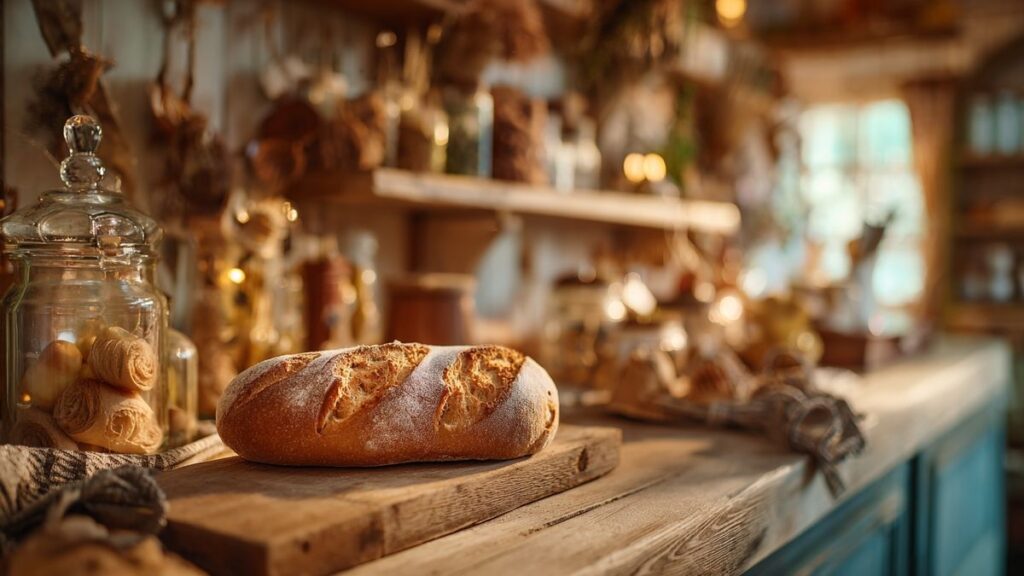
With a B1 level in French, it becomes possible to manage everyday conversations. Asking for a baguette at the bakery, buying a pair of trousers, planning an evening with friends, discussing a surprise birthday or haggling at the market: that’s exactly why we learn French, isn’t it? Here, we speak naturally, exchange ideas, hesitate, laugh — in short, we express ourselves in context, in the flow of daily life.
Choosing the right word at the cheese shop, ordering at a restaurant or describing the ideal flatmate — it all comes down to learning these key dialogues. At fle.re, we make this practice easier with adaptable teaching resources for every situation. Our materials always focus on authentic spoken French. That little extra helps every learner feel at ease as soon as they bump into a neighbour on the street or chat with a shopkeeper. No need for complicated speeches: we go straight to the point, so you can speak without stress and improve every day.
What topics come up in everyday conversations at B1 level?
Everyday conversations in French at B1 level revolve around situations from daily life — the kind you encounter in the street, at home or while travelling. At this stage, you start to handle more lively and confident exchanges, while expressing your wishes, opinions and needs. Walking into a bakery, it becomes natural to say “Je voudrais une baguette, s’il vous plaît” (I’d like a baguette, please). Topics typically cover food, shopping, appointments, accommodation or leisure.
What's your real French level?
Answer 10 quick questions right here, without leaving the page. Create your account at the end to see your level.
Test complete! 🎉
Create your free account to see your estimated level and unlock a tailored path.
See my levelInteracting with others — whether at the supermarket, in a café or on the phone — is part of daily life and requires precise but accessible vocabulary. Many learners at this level enjoy personalising exchanges to share an anecdote about their ideal flatmate, plan a surprise birthday, or even negotiate when buying second-hand furniture. Humour, spontaneity and the ability to recount memories also develop, giving conversations a much more natural tone. Topics also vary to include organising events (parties, outings with friends), and sometimes light debates on personal preferences, habits or the weather. Exchanges are often structured with a greeting, a personal turn to speak, and phrases that keep the conversation alive: “And you, where do you usually buy furniture?” or “What are you doing this weekend?” — nothing better for keeping the dialogue going.
How to structure a fluent and natural conversation at B1 level?
Building a fluent conversation in French at B1 level involves using logical connectors, follow-up phrases and open questions. Instead of sticking to a simple question-and-answer format, you can move on to “You know, I tried a new bakery yesterday…”, or give your opinion while inviting the other person to share their own experience. Using polite formulas remains the foundation, but they can be paired with simple idiomatic expressions to make exchanges more dynamic. Learners can also rely on common conversational patterns, such as presenting a problem (“I’m looking for an open pharmacy…”), asking for advice (“Do you know a good restaurant?”), or making a suggestion (“We could organise a big apéro on Saturday!”).
- Use simple connectors: such as “parce que” (because), “mais” (but), “donc” (so), “alors” (then), to explain or justify.
- Ask open questions: “Qu’est-ce que tu en penses ?” (What do you think?), “Comment tu fais d’habitude ?” (What do you usually do?)
- Keep the conversation going: using everyday phrases like “Et toi ?” (And you?), “Par contre, moi je trouve que…” (On the other hand, I think that…).
- Express your emotions: share how you feel, for example “Je suis vraiment ravi d’être ici” (I’m really glad to be here).
- React spontaneously: with small laughs, nods or natural interjections.
What tools and activities help improve everyday conversations?
Working on spoken French conversations at B1 level comes down to practice and role-playing, using interactive resources and varied activities. Downloadable PDF worksheets are widely used to launch dialogues: playing “the seller and the buyer” in a shop simulation, staging a surprise birthday scenario or discussing the ideal flatmate. These playful activities encourage spontaneity by letting learners take on different characters and practise improvising responses.
Specialist platforms (such as fle.re) also offer targeted exercises on themes like eating out, buying clothes or everyday services (post offices, train stations, pharmacies). The variety of contexts is invaluable: you get used to asking for information at the station, answering a question in an organic shop, or choosing the right cheese at the cheese counter. This helps overcome the fear of speaking and gain the confidence to express your needs clearly in everyday life.
What concrete dialogue examples can you practise at B1 level?
Let’s imagine a few everyday scenes you might encounter in French at B1 level. For example: walking into a bakery, chatting about hobbies, or calling to make a medical appointment. Here are three typical dialogues to practise every day:
| Situation | Typical Dialogue | Language Goal |
|---|---|---|
| At the bakery | – Bonjour, je voudrais deux croissants s’il vous plaît. (Hello, I’d like two croissants please.) – Avec ceci ? (Anything else?) – Ce sera tout, merci. (That’ll be all, thank you.) | Asking, ordering, thanking |
| On the phone (medical) | – Bonjour, je voudrais prendre rendez-vous. (Hello, I’d like to make an appointment.) – Pour quel motif ? (For what reason?) – C’est pour une consultation. (It’s for a check-up.) | Making an appointment, explaining a request |
| Going out with friends | – On va au cinéma vendredi ? (Shall we go to the cinema on Friday?) – Pourquoi pas ! À quelle heure ? (Why not! What time?) – 19h, ça te va ? (7 pm, does that work for you?) | Suggesting, confirming, organising |
What pitfalls should you avoid when conversing in French at B1 level?
Even with a good foundation, certain mistakes tend to recur in spoken exchanges. A common pitfall is sticking to overly textbook-style patterns, without daring to improvise or adapt the level of language to the situation. On the contrary, it’s strongly encouraged to vary your structures, use synonyms, and accept that you can make mistakes without losing face! French speakers appreciate the effort to communicate, even with imperfections, as long as the intention to get a message across is clear.
Another obstacle is managing stress: worrying about not understanding everything or getting stuck on a technical word. To overcome this, it can be useful to learn a few phrases to ask for repetition or to buy time, such as “Pardon ?” (Sorry?), “Pouvez-vous parler plus lentement ?” (Could you speak more slowly?) or “Je ne comprends pas, pouvez-vous expliquer ?” (I don’t understand, could you explain?). Finally, limiting your progress to theory has its limits. To improve in everyday French conversations, nothing beats regular practice, whether through role-plays, group discussions or real outings. And if you’re looking for a well-adapted basic vocabulary for beginner or intermediate learners, I recommend taking a look at the beginner French vocabulary offered by fle.re to enrich your exchanges day by day.
Conclusion
Mastering everyday conversations at B1 level in French opens the door to a wide range of simple but enriching interactions. Whether ordering at a restaurant, making a purchase at a bakery or finding your way at the train station, these exchanges build confidence and spontaneity in expression. You sometimes catch yourself naturally discussing the ideal flatmate or organising a surprise birthday with the right phrases for the situation.
These everyday dialogues allow you to practise the language in authentic contexts, whether at the market, at the cheese shop or during a friendly debate about which furniture to buy. It’s a stage that helps everyone speak up easily and feel quickly at ease in a French-speaking environment. In short, you find your feet fast, you dare to speak, and communication becomes much more fluid, natural and enjoyable.
To improve your vocabulary for French B1: everyday conversations, it is recommended to work with thematic flashcards (bakery, market, restaurant, etc.) and use these words regularly in context. Role-plays, listening to authentic recordings and practising with native speakers all help with memorisation. It is also useful to keep a personalised vocabulary notebook and frequently revise typical expressions used when shopping or ordering. Taking the time to practise across a variety of everyday situations helps build fluency and retain new words encountered in daily conversations. To progress in French B1: everyday conversations, cover a range of topics such as: buying food (at the bakery, market, cheese shop), ordering at a restaurant or café, shopping for clothes, using services (post office, pharmacy, train station) and organising everyday events (birthdays, debates about choosing furniture). Working on these situations helps you acquire the right grammatical structures and learn vocabulary genuinely used by French speakers in their daily lives. In French B1: everyday conversations, prioritise simple but correct structures: asking politely (“Je voudrais…”, “Pourriez-vous…”, “Est-ce que je peux…”), expressing an opinion (“À mon avis…”, “Je pense que…”), making a suggestion (“Et si on…”, “On pourrait…”). Knowing how to link sentences with connectors like “et” (and), “mais” (but), “parce que” (because) helps build spontaneity. The important thing is to be understood while remaining natural, even with limited vocabulary, especially in shops, cafés or public services. To practise French B1: everyday conversations without a native speaker, you can use role-play activity sheets, read dialogues aloud or record yourself while simulating different roles. There are also forums or apps dedicated to language exchange where you can chat in writing or by voice. Imitating intonation and repeating set phrases from teaching materials allows you to practise on your own. Videos and podcasts with subtitles also offer the chance to hear authentic conversations and work on your comprehension and pronunciation. To ease daily life in French B1: everyday conversations, focus on exercises where you take on different roles: seller, customer, organiser, friend suggesting an event. Role-plays with PDF worksheets, debate or negotiation simulations and dialogues about buying goods (food, clothing, services) are particularly effective. Vary the contexts to practise spontaneity: booking a table, asking for directions in the street, making a suggestion during a debate. Practising these spoken situations builds confidence for interacting easily in French every day.How to expand your vocabulary for everyday B1 French?
What topics should you cover to progress in B1 conversations?
What sentence structures should you prioritise in spoken B1 French?
How to practise everyday dialogues without a native speaker?
What spoken exercises make everyday life easier at B1 level?
Sources
- Ministère de l’Éducation nationale et de la Jeunesse. « Le Cadre européen commun de référence pour les langues (CECRL) ». education.gouv.fr, 2022-08-30. Consulté le 2024-06-20. Consulter
- France Éducation international. « Ressources pédagogiques pour l’enseignement du français langue étrangère (FLE) ». France Éducation international, 2023-02-15. Consulté le 2024-06-20. Consulter
- Conseil de l’Europe. « Cadre européen commun de référence pour les langues : apprendre, enseigner, évaluer ». Conseil de l’Europe, 2020-04-16. Consulté le 2024-06-20. Consulter

What's your real French level?
Answer 10 quick questions right here, without leaving the page. Create your account at the end to see your level.